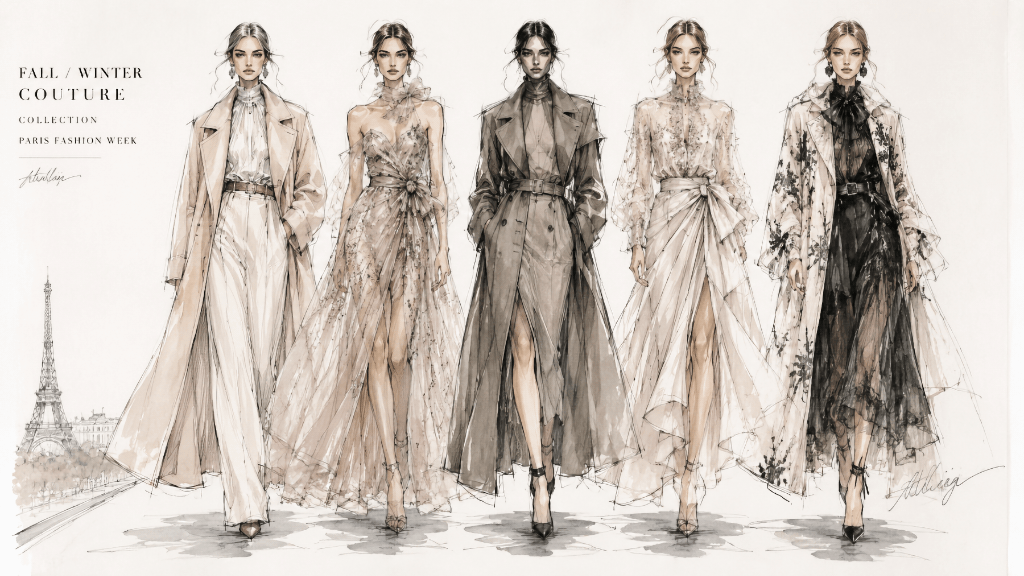
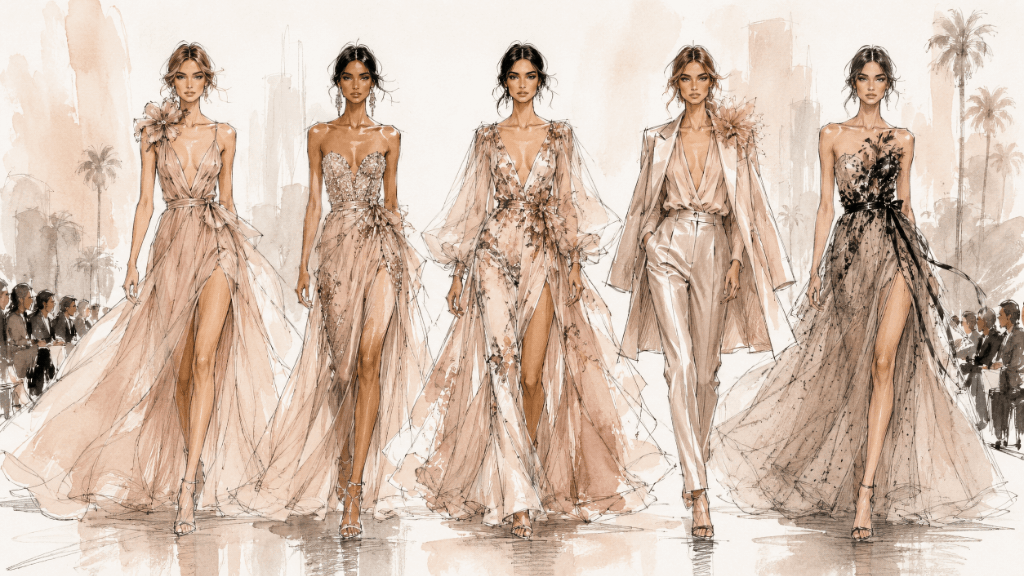
There’s a fold at the shoulder of a jacket. On its own, it’s just one of the things you might notice as the model walks past. Then a skirt comes out with that fold at the hip. Later it turns up on a dress, loose enough to swing near the floor. By then you might be looking for it. Ask “what is contemporary fashion?” on a shop floor and you may get a label for a group of clothes. Watch a collection in order and you can see an idea being worked out.
On a phone, that first jacket might be a short clip you open between a film listing and a tab for rusheria casino. It takes a moment to decide whether to save it. The next few looks are worth staying for. A fold that seemed like a small flourish at the shoulder begins to look like a choice the designer wants you to remember.
A collection begins with something specific
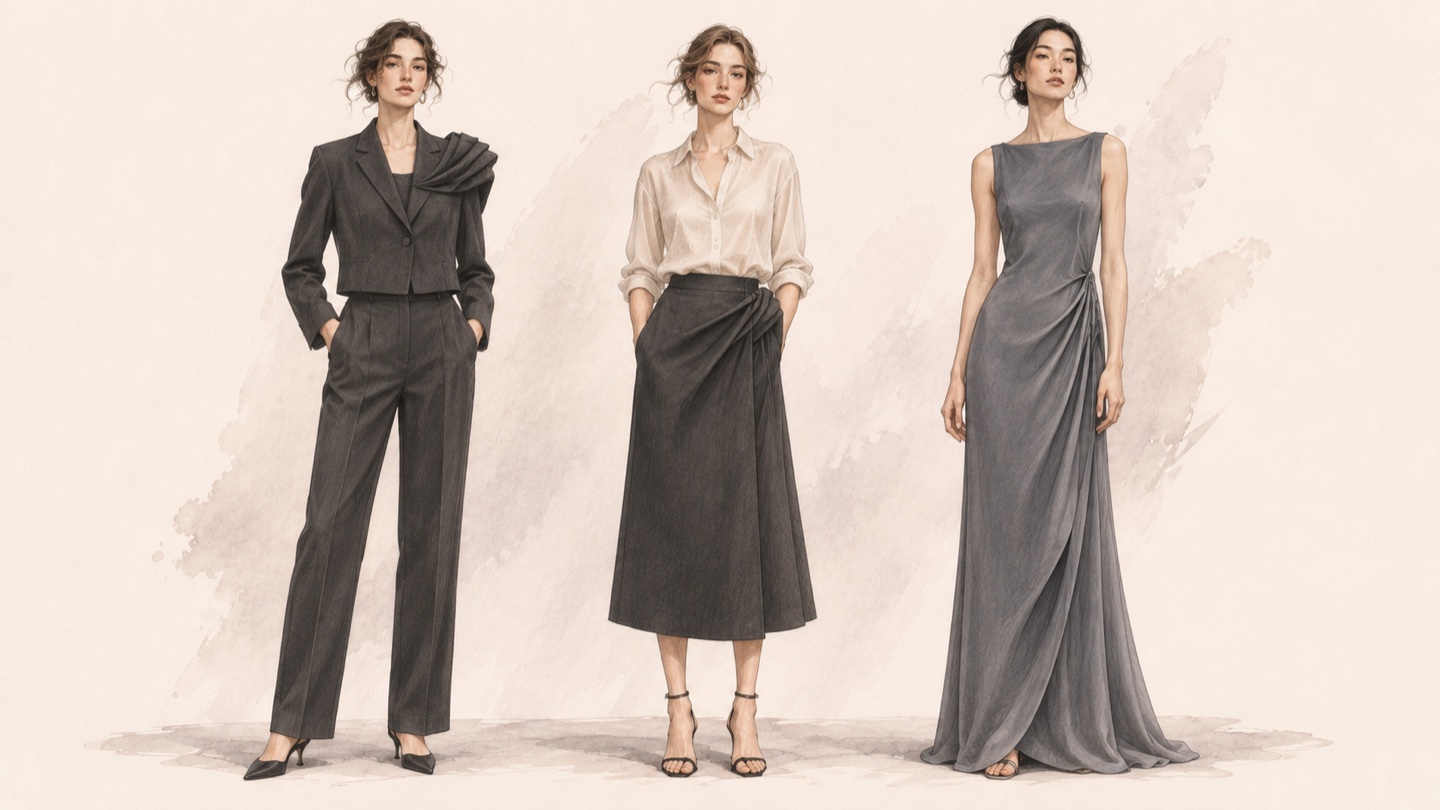
Contemporary fashion designers can take an idea as broad as movement and give it a particular shape. For this imaginary collection, start with one fold and two lengths of cloth. Press the first into a sharp crease. Let the second hang. One might catch the light like the edge of a sheet of paper. The other could fall almost flat against the body. There’s already a decision to make about which garment gets which cloth.
A few swatches spread across a table can make those decisions easier to see. Bend the gray one and you may find it turns lighter at the ridge. Bend the ivory one and what you see first might be the shadow beneath it. The two cloths can do different work in a group even if they look close in color. Here’s how a few starting ideas could play out.
| Starting idea | First use | A variation worth trying |
|---|---|---|
| A deep fold | At the shoulder of a jacket | Along the side of a skirt |
| A thin stripe | In an overshirt | Inside a turned cuff |
| A matte fabric | In wide trousers | In a shorter, more structured jacket |
| A warm gray | Across a full outfit | In a small panel beside ivory |
The dress can take a bigger fold than the jacket, where there’s only so much room around the shoulder. On a skirt, a smaller version might do more because it catches the eye halfway down the outfit. It’s easy to miss these differences with samples spread around the room. Line them up and see which one you look at first.
An idea can carry through a collection even when its loudest version appears only once.
What changes when the sample goes on
The jacket fits neatly until the model reaches forward. Then the fold lifts and stands away from the shoulder. A change of a few inches might help it settle, though it could also leave the jacket looking much plainer from the front. Put it back beside the skirt after the fitting. A fix that works on the person wearing it may change what the jacket does for the group.
Then there’s the skirt that does almost the same job as the dress. Both put the fold at the hip, but only the dress gives it enough room to move. Put the two samples side by side and the skirt may be easier to let go. The questions at this point have as much to do with what belongs on the rail as how well each piece fits.
- Can the wearer raise an arm without pulling the jacket out of place?
- Does the fold hold its shape after sitting?
- Where does the edge land beside the next layer?
- Do two pieces bring the same thing to the group?
- Is there a quieter piece that makes the others clearer?
Watch what happens just before someone pulls a sleeve into place. Maybe the cloth catches under the arm as they reach. It can be a tiny adjustment, easy to miss if you only look at the jacket once they’ve put their arms back down.
A fitting shows what the wearer has to do to make the clothes behave.
Why the order of the looks matters
The Romeo + Juliet Couture Press archive records its Fall Winter 2017 show in Los Angeles. A show archive gives you somewhere to try this kind of looking. When several looks are visible, pick a shape and see what happens to it as you move through the images. Compare two pieces you might ordinarily skip past. Sometimes the quieter one makes it easier to see what was unusual about the other.
In the imaginary lineup, a short dark jacket could go first. Follow it with a longer layer in the same color and the eye has something steady to hold on to while the hem drops. Slip a plain knit in before the dress and there’s a little time to forget the fold. Here, contemporary fashion style has as much to do with how one look leads into the next as with what’s on any single model.
| Place in an imagined lineup | Example | What it does |
|---|---|---|
| Opening | A short jacket in a dark color | Establishes a shape |
| Early variation | A longer layer in the same color | Extends the line |
| Middle pause | A plain knit and trousers | Lets a strong detail recede |
| Closing | A dress with the original fold | Brings the idea back at a new scale |
What a brand carries into the next season
Contemporary fashion brands ask customers to remember things from one season to another. That can be as small as a preference for where a coat ends. A brand that likes the contrast between a short jacket and a long skirt might use it again with a cropped knit and wide trousers. The cloth can change entirely and the balance still feels familiar. That kind of memory helps give a new collection a place alongside the old one.
Set two seasons beside each other. You could easily be looking at different colors, different fabrics, and very different photographs. Pick something smaller to compare, such as the point where a sleeve begins or the length of a jacket beside a skirt. Habits like these can be easier to spot once you have a few examples in front of you.
- Where the shoulders sit across several looks.
- Which lengths keep reappearing.
- How often one color comes back in a small area.
- Whether a detail shifts between everyday and dressier pieces.
- What a quiet outfit shares with the most elaborate one.
The next time you stop on a runway photo, find the look that came after it. See whether a hem dropped, a color moved to a cuff, or a fold turned up somewhere you didn’t expect. That’s one way to see what contemporary fashion means when you’re watching a show. If the fold has gone entirely, keep watching. A few looks later, it may be the thing that makes you remember the jacket.