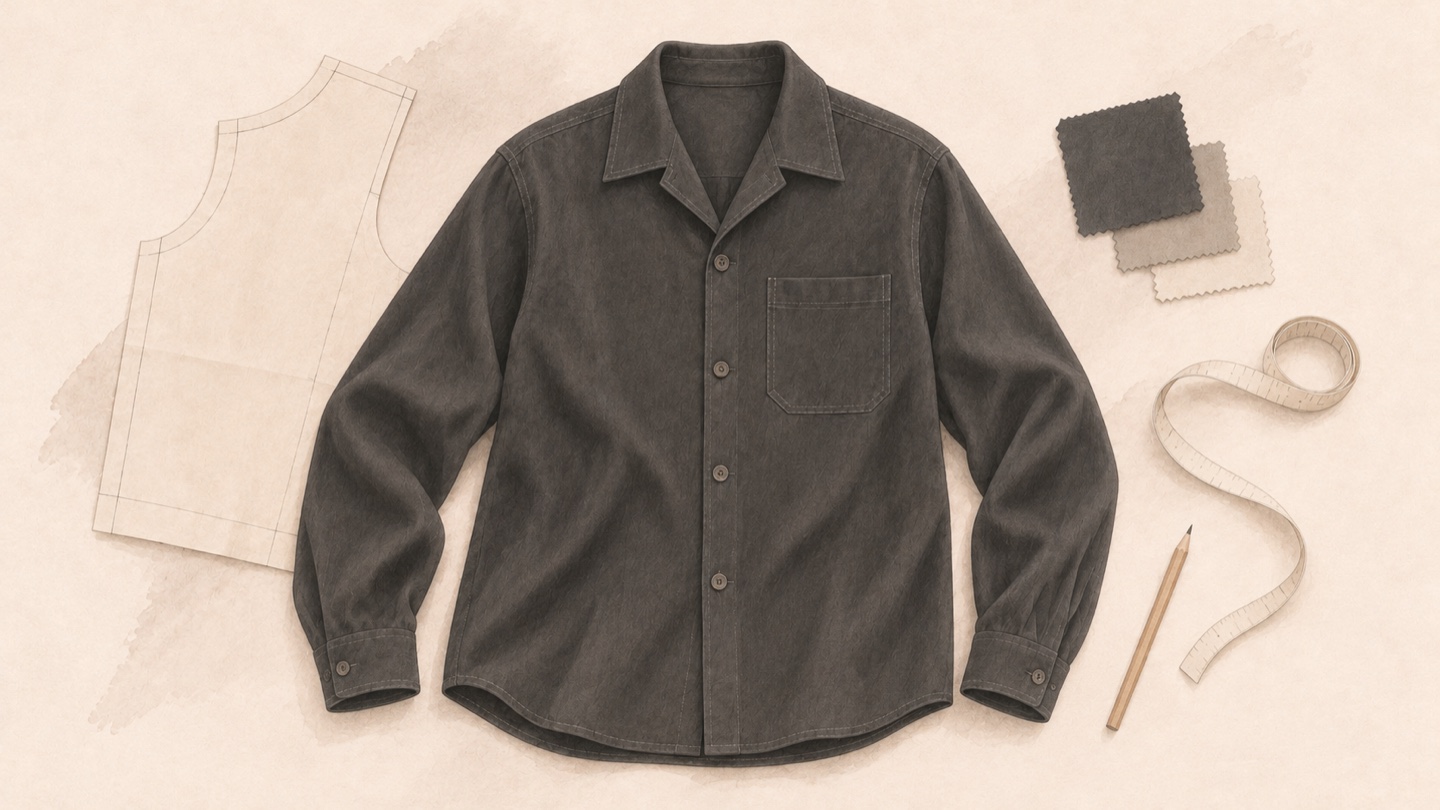
The pocket on the sample is an inch too low. You can see it as soon as you put your phone in and reach for it. There’s a whole brand to think about, but this is the decision in front of you. The piece is a light overshirt, the sort you might pull on over a tee when you walk into a cold room after a warm afternoon. It has to work for someone often enough to justify making another one. Moving the pocket is a sensible place to begin.
That same pocket has to make sense on a screen, where the product page might be open beside a film listing or a tab for spinanzia casino. A close photo with a phone halfway in tells the shopper something they can use. So does a clear view of the shoulder over a tee. A first store can be as small as the page that answers those questions well.
Start with a garment someone would wear twice
The Romeo + Juliet Couture shop archive includes a front-zip midi skirt and a blazer with openings at the shoulders. The shape of each piece is familiar enough to make its particular detail easy to see. For the imaginary overshirt, the pocket and the room in the sleeves do that work. If the sleeve feels tight over a tee, an extra button at the pocket can wait. Find out which problem would send a buyer back to their usual shirt.
Ask someone to bring the layer they already wear. You’ll get a better conversation once there’s an actual sleeve and pocket to talk about. A person who never uses a chest pocket may show you the bag they always carry. Another might tell you exactly how their keys fall out when they bend down. Keep the brief short enough to take to a maker.
- Who will wear it and where.
- What usually goes underneath it.
- What the pocket needs to hold.
- Which fabric behavior matters most.
- What you’ll change if the sample misses the mark.
Price the first run before ordering it
How much does it cost to start a clothing brand? Price a specific batch. The dollar amounts below are made up to show how a 30-shirt order might add up. A real quote should tell you whether the maker is charging separately for the pattern, revisions, or labels. Ask when the money is due, too. A deposit on Tuesday and a balance before shipping create a different cash problem from a single bill after delivery.
| Item | Example assumption | Amount |
|---|---|---|
| Sample development | Pattern and sample work | $300 |
| First batch | 30 garments at $20 | $600 |
| Inbound freight | Getting the batch to you | $120 |
| Launch and reserve | Basic selling costs and a small buffer | $230 |
In this example, you’d set aside $1,250. The batch and inbound freight alone come to $24 a shirt. When you work out a selling price, there’s still the sample to recover and the cost of sending an order out. Allow for any duties, payment fees, packing, and returns that apply. Put recurring bills on a separate line. If you pay the maker before your store releases a payout, that gap needs cash of its own.
The price of making a shirt and the cash needed to get it to a customer are two different numbers.
Put the first garment online
If you’re working out how to start a clothing brand online, photograph the sample you would actually ship. A back view helps someone see how it hangs. Measurements taken flat help them compare it with a shirt they own. Put the fabric, care details, shipping estimate, and return terms where a buyer can find them before checkout. For US sales, check which labeling rules apply to the garment before approving the labels.
A graphic on a standard tee and an overshirt with an original cut call for different kinds of production. With the tee, you can judge the print on an existing blank. With the overshirt, you need the maker to reproduce the fit and pocket placement you approved. Think through who makes the next unit, when they get paid, and what happens if it turns up late.
| Route | What it lets you test | What to check first |
|---|---|---|
| Print on demand | Artwork on an existing garment | Sample quality and payout timing |
| Small stock run | A finished product ready to ship | Minimums and unsold sizes |
| Made to order | Whether people will wait for a piece | Production capacity and lead time |
| Preorders | Interest at a real price | Confirmed delivery window and refund terms |
What you can do before spending money
For anyone searching how to start a clothing brand with no money, the first test can happen before there’s anything to sell. A shirt from your own closet can show what you’d change. Sketch the new pocket and ask who would use it. A free interest form can keep track of people willing to look at the sample later. Manufacturing, shipping, and refunds still need a funding plan before you take orders.
“I’d wear that” is an easy thing to say. Ask what the person wore yesterday, then find out what they’d be willing to replace. If someone wants the shirt at a stated price and asks when their size will be ready, write that down alongside the compliments. It’s a more specific response, and it gives you a reason to follow up.
- Ask what they already wear in that situation.
- Find out what they paid for the last comparable piece.
- Show one sketch with a proposed price.
- Record the sizes people ask for.
- Invite them to hear when a sample is ready.
What changes when the label is luxury
If you’re asking how to start a luxury clothing brand, put the same overshirt under less forgiving light. Look at the seam where the pocket meets the front. Run a finger around the collar. See whether a second sample feels as carefully finished as the first. Budget for the time this takes, and decide how you’ll handle an exchange or a repair once a shirt leaves your hands.
On the product page, show the part that deserves the price. A close view of the pocket binding can help if you’ve put time into getting it right. So can a description of how the cloth feels or falls. A beautiful box is easier to judge once you’re happy with what goes inside it.
A customer can feel the collar long after the packaging is gone.
Put the overshirt on the table again with the quote and the notes from the people who tried it. You might have enough evidence to order a small run. You might only have enough to move the pocket and make a better sample. Either way, you’ll know more about who might buy the shirt and what it would cost to send them one. That’s a decision you can make before there’s a whole collection riding on it.